
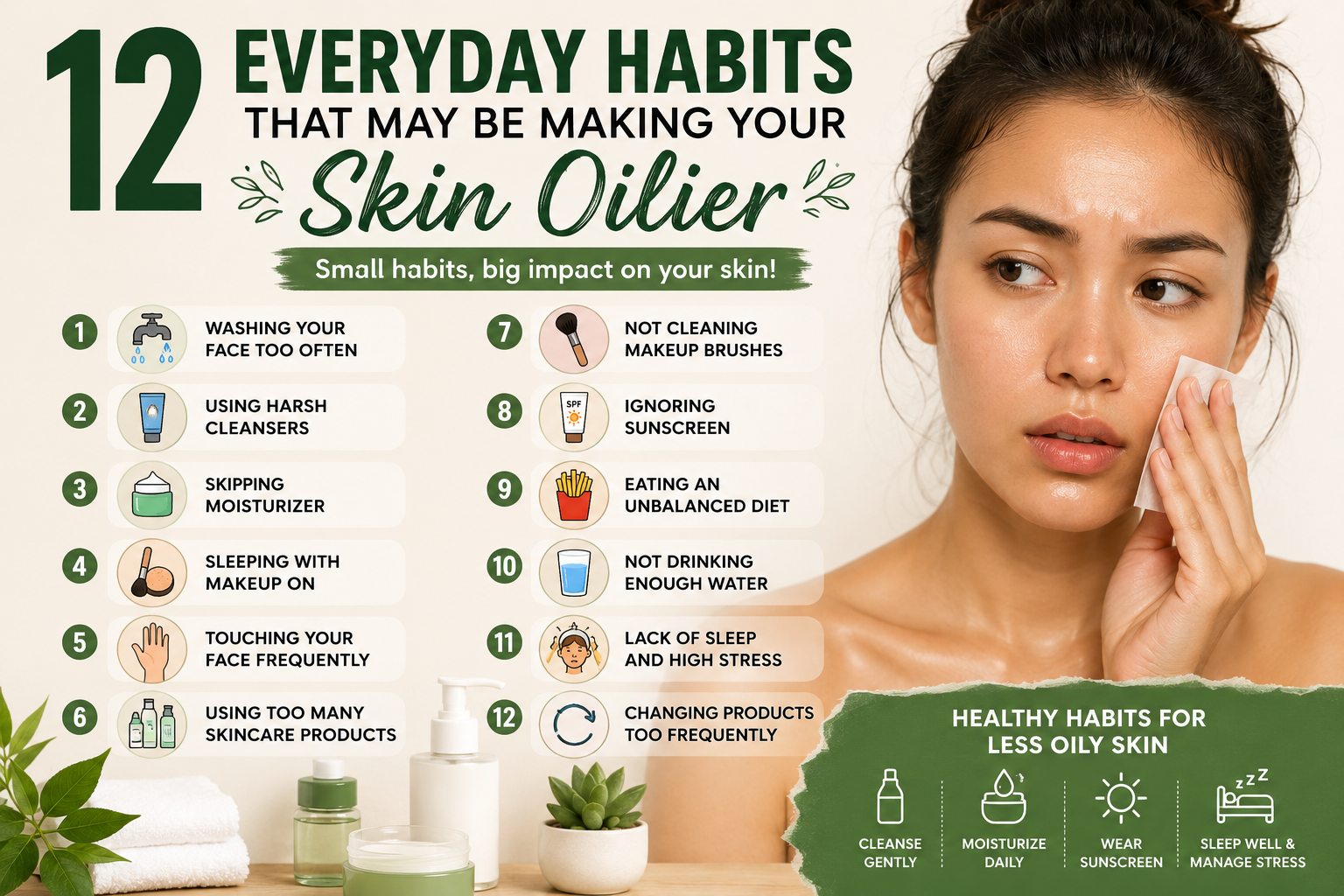
12 Everyday Habits That May Be Making Your Skin Oilier | Expert Skincare Tips
If your face feels greasy by midday, your makeup doesn’t last, or you’re constantly reaching for blotting papers, your daily habits could be playing a bigger role than you realize. While genetics and hormones are major contributors to oily skin, certain everyday routines can make excess oil production more noticeable.
The good news is that many of these habits are easy to change. Small adjustments to your skincare routine, lifestyle, and product choices can help your skin feel more balanced without stripping away its natural moisture.
This guide explores 12 common habits that may be making your skin oilier and offers practical tips to help you maintain a healthier, fresher-looking complexion.
Understanding Why Skin Produces Oil
Your skin naturally produces sebum, an oil made by the sebaceous glands. Sebum plays an important role in keeping your skin moisturized, protecting the skin barrier, and preventing excessive dryness.
Problems begin when your skin produces more oil than it needs. Excess oil can mix with dead skin cells, clog pores, and contribute to blackheads and acne.
Instead of trying to eliminate oil completely, the goal is to support your skin’s natural balance.
- 1. Washing Your Face Too Often
- 2. Using Harsh Cleansers
- 3. Skipping Moisturizer
- 4. Sleeping With Makeup On
- 5. Touching Your Face Frequently
- 6. Using Too Many Skincare Products
- 7. Not Cleaning Makeup Brushes
- 8. Ignoring Sunscreen
- 9. Eating an Unbalanced Diet
- 10. Not Drinking Enough Water
- 11. Lack of Sleep and High Stress
- 12. Changing Products Too Frequently
- Healthy Habits That Help Control Oily Skin
- Best Ingredients for Oily Skin
- Common Myths About Oily Skin
- When Should You See a Dermatologist?
- Final Thoughts
- Frequently Asked Questions
1. Washing Your Face Too Often
It seems logical that washing your face several times a day would reduce oil.
However, overwashing may strip away your skin’s natural oils. In response, your sebaceous glands may produce even more sebum.
Better Habit
- Wash your face twice daily.
- Cleanse after heavy sweating.
- Use a gentle, pH-balanced cleanser.
2. Using Harsh Cleansers
Some cleansers leave your skin feeling “squeaky clean.”
While that may seem satisfying, it often means your skin barrier has been stripped of essential moisture.
Look for Gentle Ingredients
- Niacinamide
- Green tea extract
- Glycerin
- Ceramides
Avoid products with high amounts of alcohol if they leave your skin feeling tight or irritated.
3. Skipping Moisturizer
One of the biggest skincare myths is that oily skin doesn’t need moisturizer.
When skin becomes dehydrated, it may produce more oil to compensate.
Choose
- Oil-free moisturizers
- Gel moisturizers
- Lightweight lotions
- Non-comedogenic formulas
Hydrated skin is often easier to manage.
4. Sleeping With Makeup On
Leaving makeup, sunscreen, and daily dirt on your skin overnight can clog pores and contribute to breakouts.
Healthy Habit
Always remove makeup before bed and cleanse your face thoroughly.
Your skin repairs itself while you sleep, so clean skin gives it the best chance to recover.
5. Touching Your Face Frequently
Throughout the day, your hands collect oil, dirt, and bacteria from phones, keyboards, door handles, and other surfaces.
Touching your face transfers these impurities to your skin and may contribute to clogged pores.
Try This
Become more aware of how often you rest your chin on your hand or touch your forehead.
6. Using Too Many Skincare Products
More products don’t always mean better results.
Layering multiple active ingredients can overwhelm your skin and increase irritation.
Keep It Simple
A basic routine usually includes:
- Gentle cleanser
- Lightweight serum
- Moisturizer
- Sunscreen
Add treatment products only when needed.
7. Not Cleaning Makeup Brushes
Dirty makeup brushes collect oil, dead skin cells, and product residue over time.
Using unwashed brushes repeatedly can transfer buildup back onto your skin.
Cleaning Schedule
- Wash foundation brushes weekly.
- Clean makeup sponges every few days.
- Allow them to dry completely before use.
8. Ignoring Sunscreen
Some people avoid sunscreen because they think it will make oily skin feel greasy.
Modern sunscreens are available in lightweight, matte, and oil-free formulas.
Daily sun protection helps maintain healthy skin and prevents sun damage.
Choose:
- SPF 30 or higher
- Broad-spectrum protection
- Non-comedogenic formulas
9. Eating an Unbalanced Diet
No single food has been proven to directly cause oily skin in everyone.
However, a balanced diet supports overall skin health.
Include More
- Fresh fruits
- Vegetables
- Whole grains
- Lean proteins
- Healthy fats
If you notice certain foods seem to affect your skin, monitor your diet and discuss concerns with a healthcare professional.
10. Not Drinking Enough Water
Hydration supports healthy skin function.
While drinking water won’t stop oil production, dehydration can affect how your skin feels and functions.
Aim to stay hydrated throughout the day.
11. Lack of Sleep and High Stress
Sleep and stress both influence overall health, including your skin.
Stress may affect hormone levels, and poor sleep can make your skin look tired and less balanced.
Healthy Habits
- Aim for 7–9 hours of sleep.
- Practice meditation or deep breathing.
- Exercise regularly.
- Take short breaks during busy days.
12. Changing Products Too Frequently
Trying every trending skincare product can make it difficult to know what actually works for your skin.
Your skin usually needs several weeks to adjust to new products.
Better Approach
Introduce one new product at a time and monitor how your skin responds.
Consistency is more effective than constantly switching routines.
Healthy Habits That Help Control Oily Skin
Replacing poor habits with healthier ones can make a noticeable difference over time.
Daily Routine
Morning
- Gentle cleanser
- Lightweight serum
- Oil-free moisturizer
- Sunscreen
Evening
- Remove makeup
- Gentle cleanser
- Treatment product (if needed)
- Moisturizer
Weekly
- Clay mask
- Gentle exfoliation
- Clean makeup brushes
Best Ingredients for Oily Skin
Look for products containing ingredients such as:
Niacinamide
Supports the skin barrier and improves the appearance of enlarged pores.
Hyaluronic Acid
Hydrates without feeling greasy.
Salicylic Acid
Helps remove dead skin cells from pores.
Green Tea Extract
Provides antioxidant benefits.
Zinc PCA
Often included in oil-control skincare products.
Common Myths About Oily Skin
Myth: Oily Skin Doesn’t Need Moisturizer
False.
Hydration is essential for every skin type.
Myth: Washing Your Face Five Times a Day Helps
False.
Overwashing may encourage more oil production.
Myth: Sunshine Dries Out Oily Skin
Sun exposure damages your skin and can weaken its natural barrier.
Always wear sunscreen.
Myth: Expensive Products Always Work Better
Healthy skin depends more on consistent care than on price.
When Should You See a Dermatologist?
Consider professional advice if you experience:
- Severe acne
- Painful cysts
- Persistent irritation
- Sudden changes in oil production
- Breakouts that don’t improve despite a consistent routine
A dermatologist can recommend treatments tailored to your skin.
Final Thoughts
Managing oily skin isn’t just about choosing the right cleanser or moisturizer. Your everyday habits have a significant impact on how your skin behaves.
Simple changes—such as cleansing gently, moisturizing daily, cleaning makeup brushes, staying hydrated, getting enough sleep, and avoiding overwashing—can help your skin feel healthier and more balanced over time.
Remember that oily skin isn’t something you need to “fix.” It’s a natural skin type. With the right habits and a consistent routine, you can reduce excess shine, keep pores clearer, and enjoy healthier-looking skin.
Frequently Asked Questions
Can everyday habits really make my skin oilier?
Yes. Habits such as overwashing, skipping moisturizer, poor sleep, and using harsh products can make excess oil more noticeable.
How many times should I wash my face?
For most people, washing twice a day is enough, with an additional cleanse after heavy sweating if needed.
Should I moisturize oily skin?
Yes. A lightweight, oil-free moisturizer helps support your skin barrier.
Does stress affect oily skin?
Stress may influence hormones that affect oil production in some people.
How long does it take to notice improvements?
With a consistent routine and healthier habits, many people notice gradual improvements over several weeks.
Leave a Reply